10th edition of the Artivist Sailing. Eco-activism
Eco-Activism
There is enough in the world for everyone’s need, but not for some people’s greed. Mahatma Gandhi
To mark the 10th voyage of The Artivist Sailing, we will raise the banner of EcoActivism and invite representatives of two major international movements on board: Navdanya, the nine seeds of the common good, and Greenpeace, the green peace, both of which are fighting against the commodification of natural resources and the harmful effects of greed on our planet; the overexploitation and pollution of the land and seas; or the control of life, whether through the use and abuse of fertilisers and pesticides, or through the genetic modification of seeds. Navdanya raises awareness by training a million farmers; Greenpeace does so through its active presence; and the two complement each other in building ‘eco-awareness’ – that is, knowledge and active care for the ‘Eco’ or ‘Oikos’, our common home.
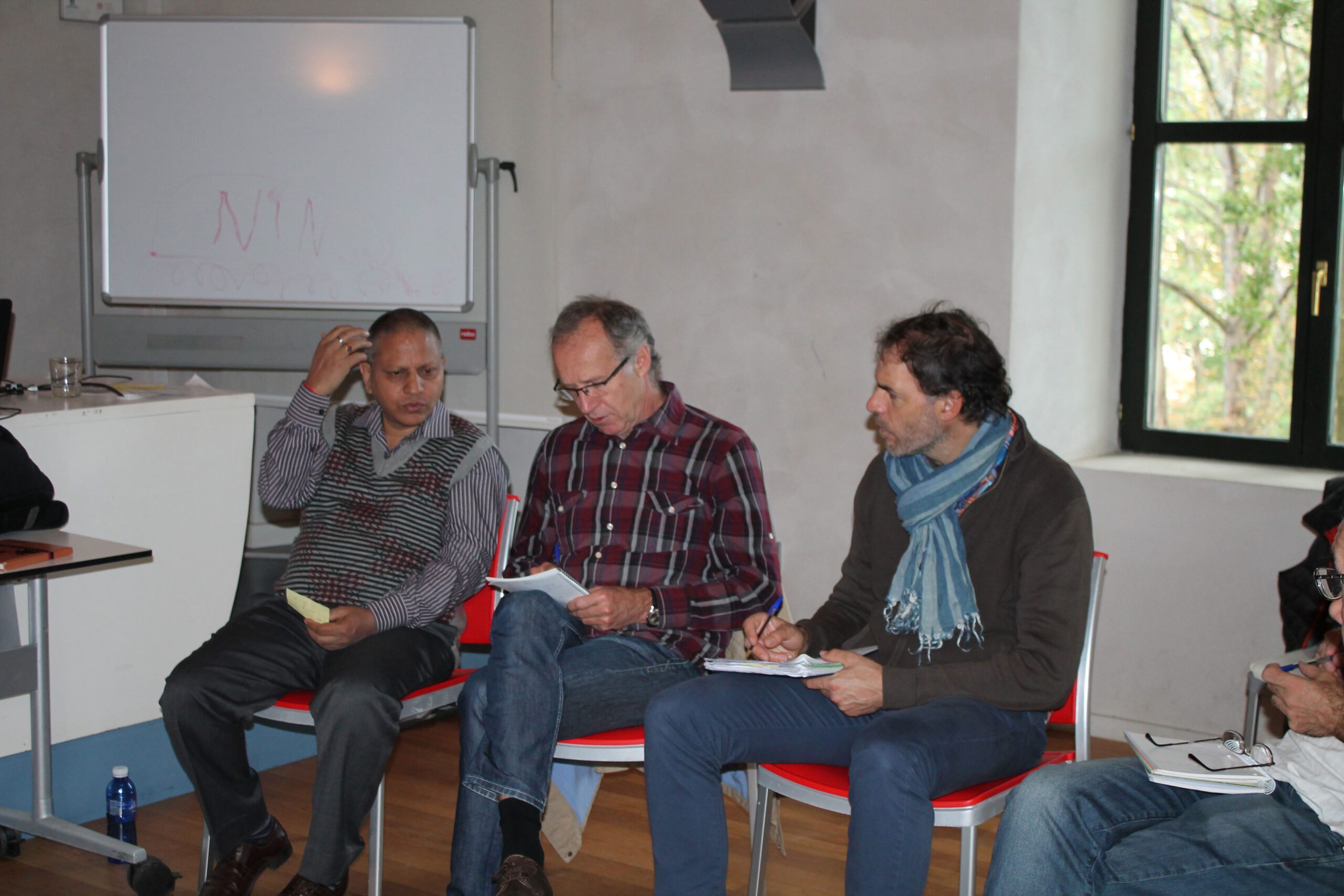
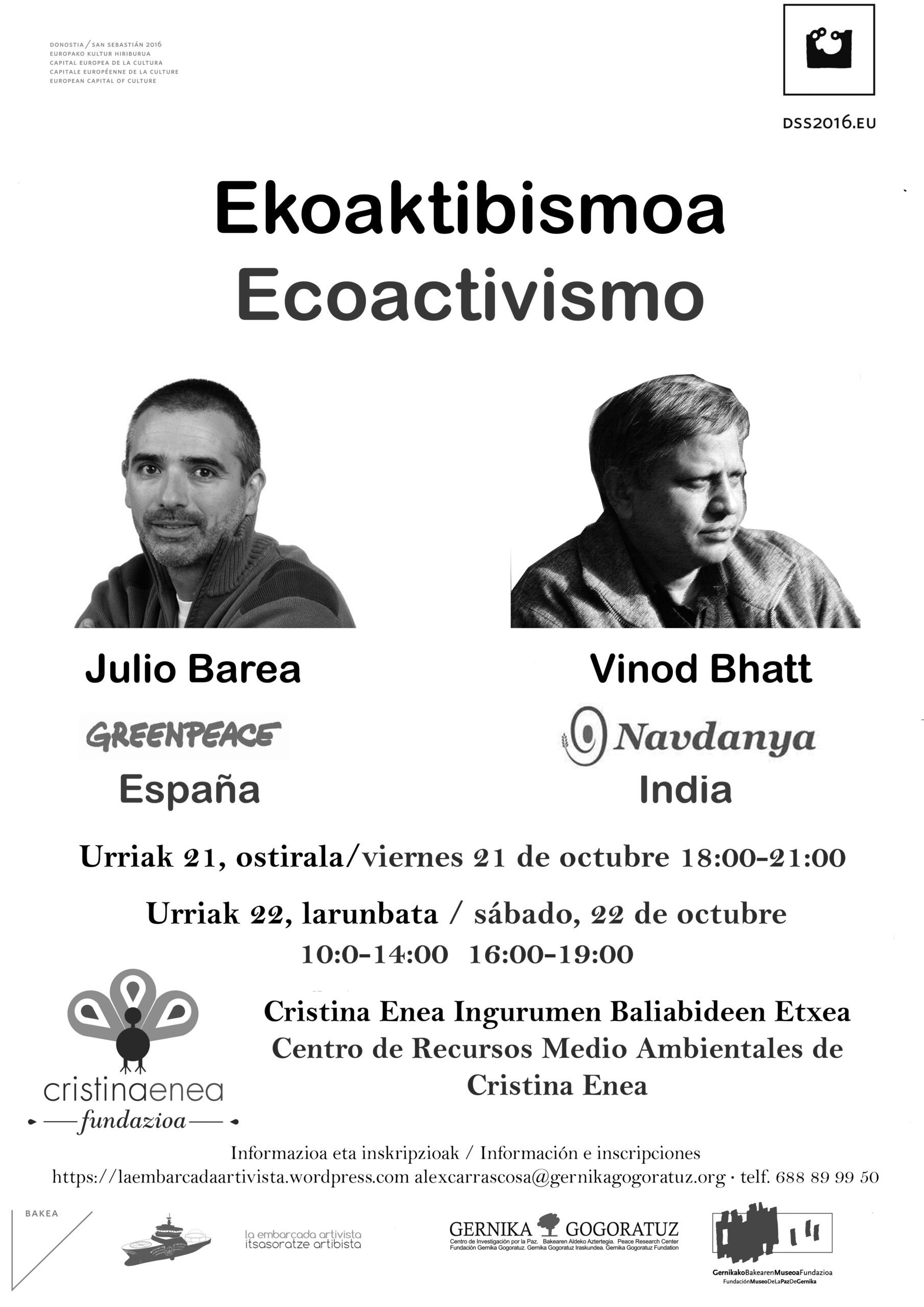
21 October, Friday, 18:00-21:00
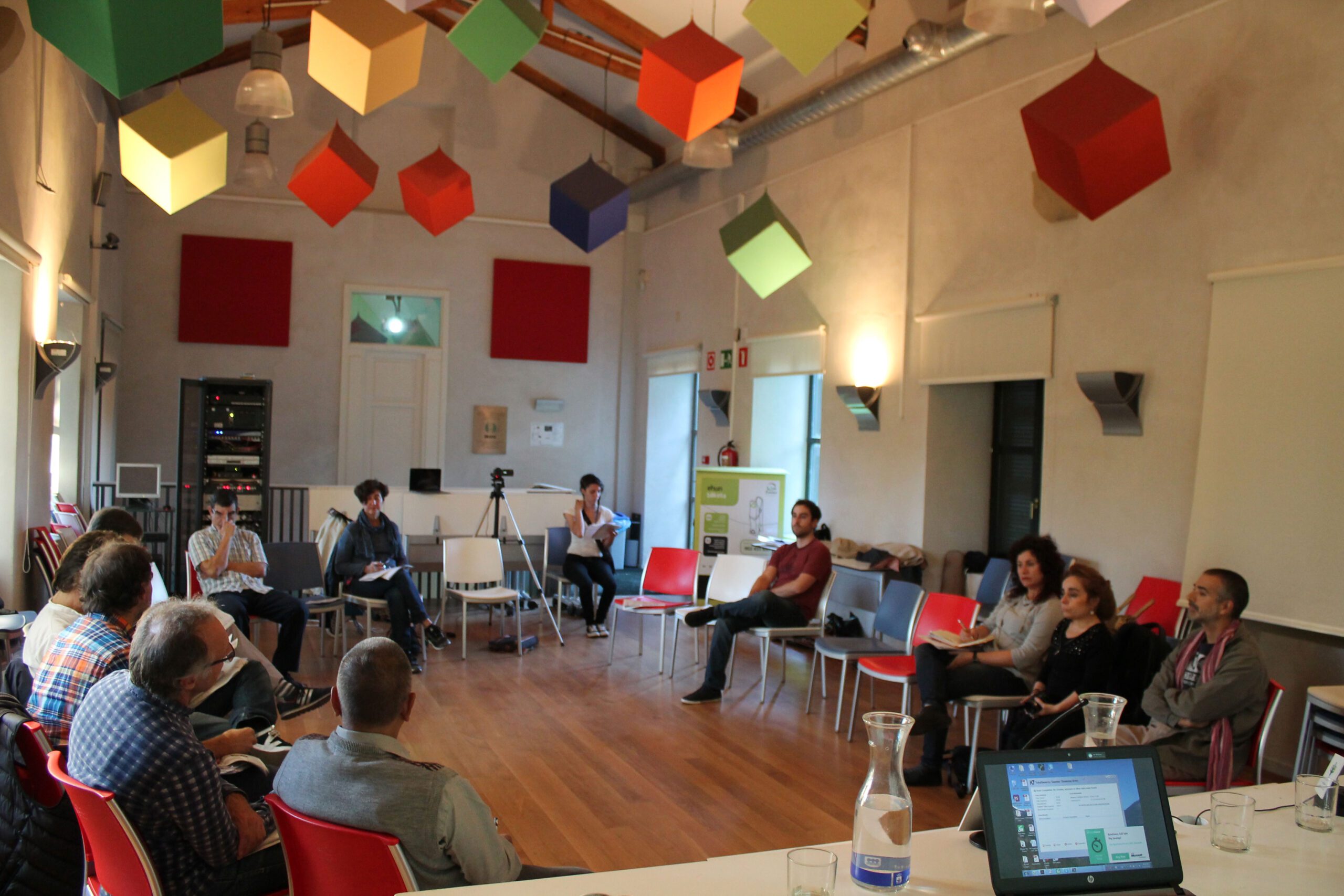
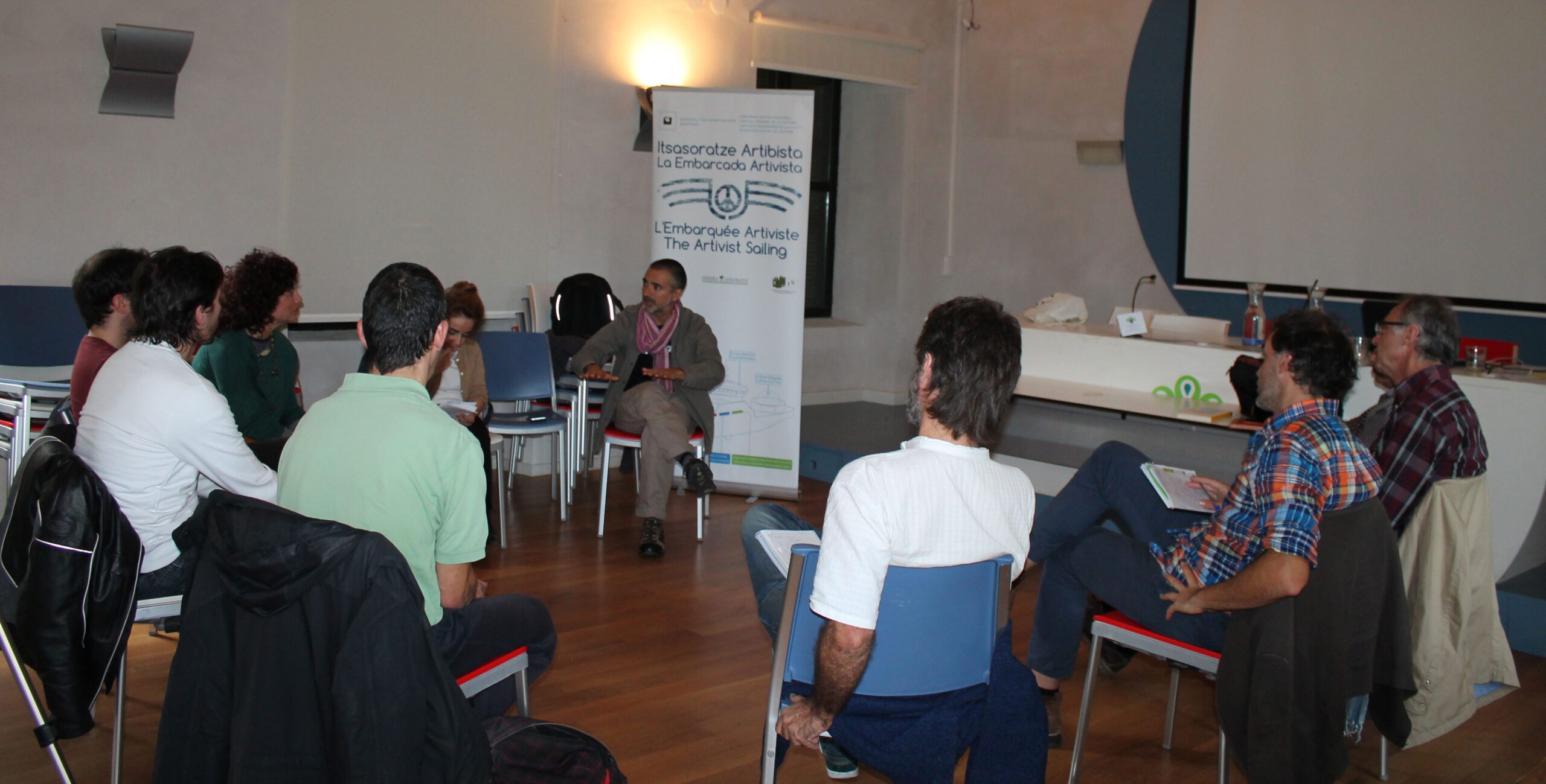
An open discussion forum between the guests and representatives of local organisations and civil society.
22 October, Saturday, 10:00-14:00 and 16:00-19:00
A workshop session to design a collective ‘eco-action’, co-facilitated by the guests themselves.
Place: Centro de Recursos Medio Ambientales de Cristina Enea Paseo Duque de Mandas, 66. 20012 Donostia-San Sebastián
GUEST SPEAKERS:
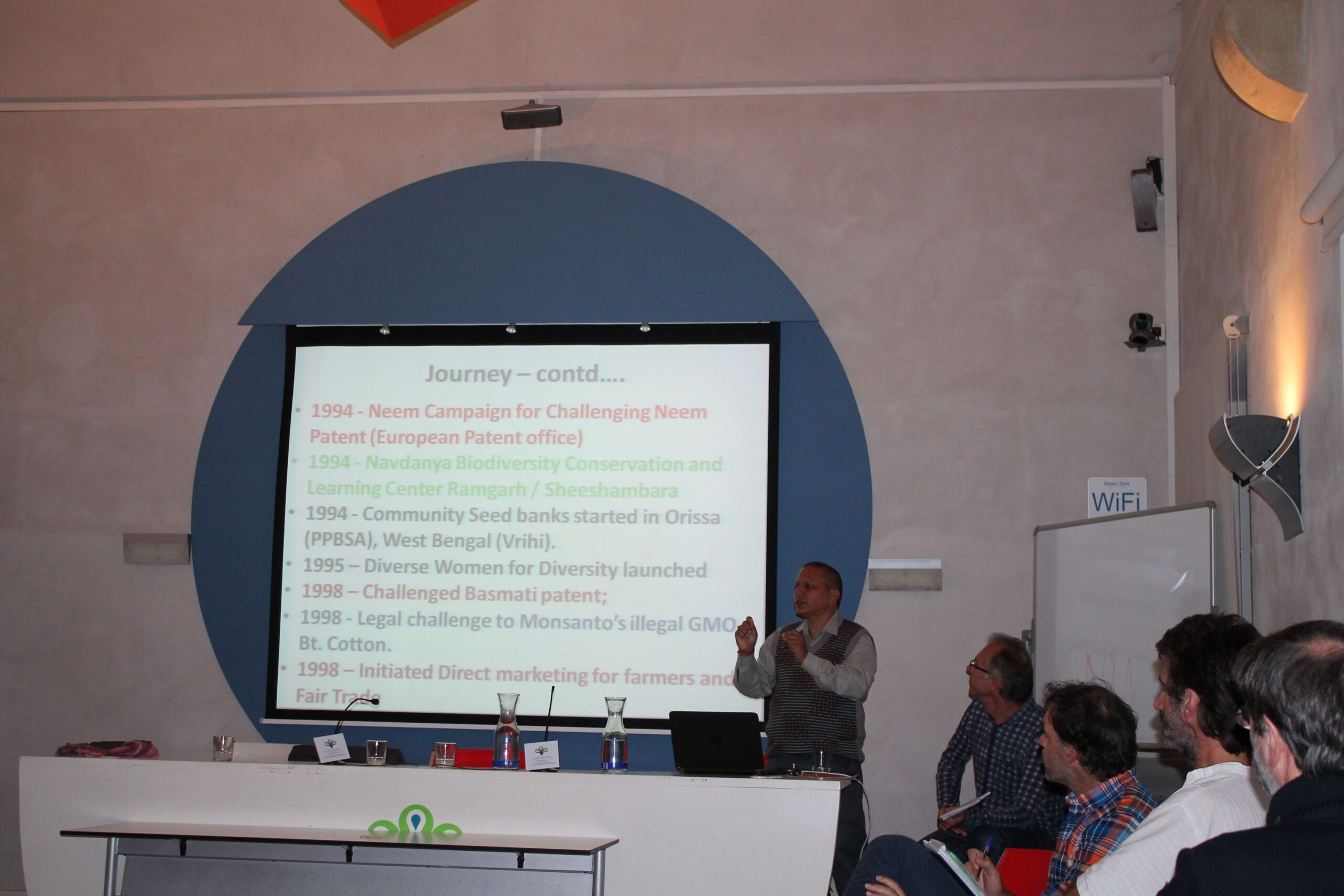
• Dr. Vinod Bhatt, director of Navdanya (Dehradun, Uttarakhand, India)
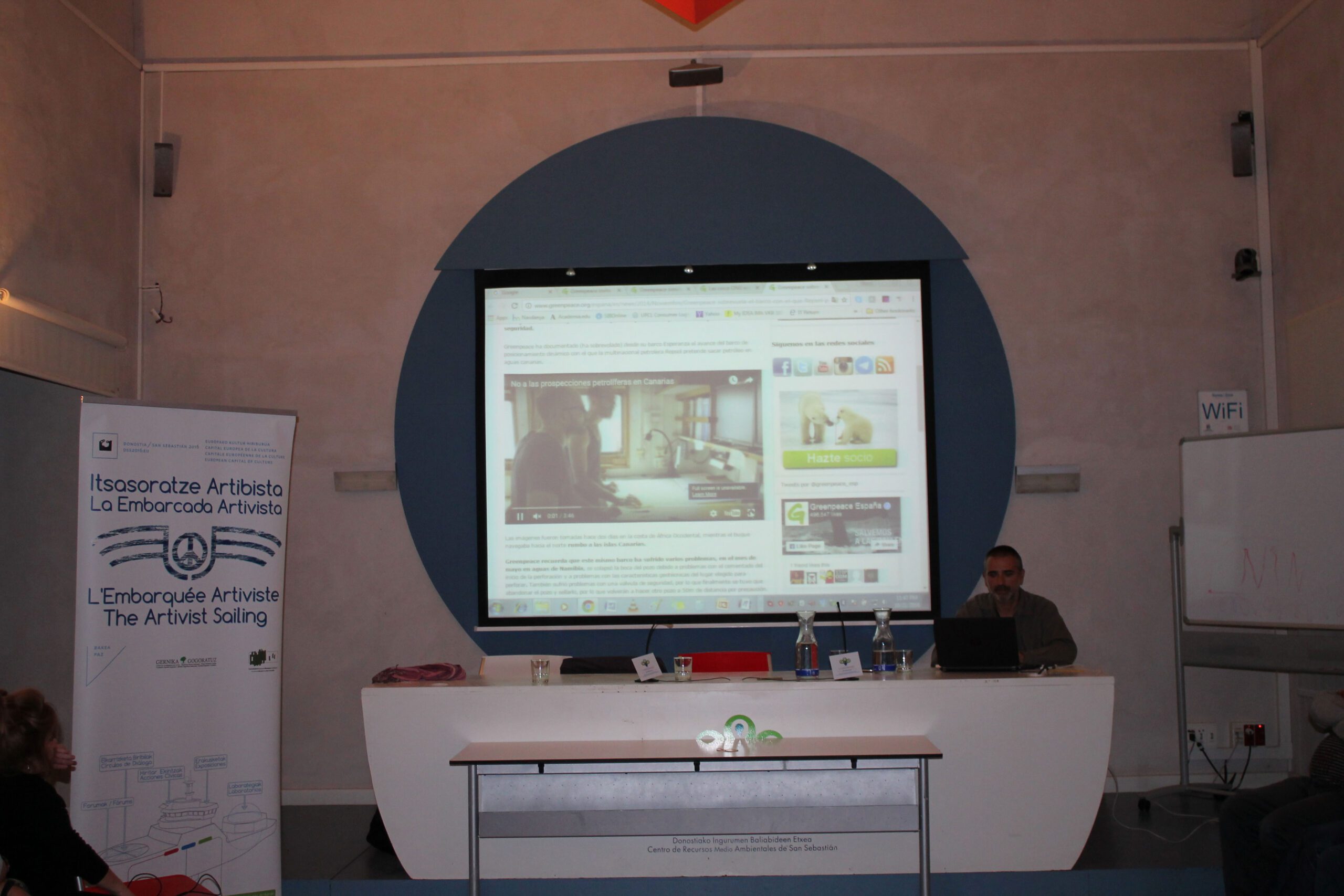
• Dr. Julio Barea, campaign manager in Greenpeace-España.
NAVDANYA
The name Navdanya means “nine seeds,” symbolising the protection of biological and cultural diversity, and also “the new gift,” representing seeds as commons and the right to save and share them. In today’s context of biological and ecological destruction, seed savers are the true givers, offering the ultimate gift—the gift of life, heritage and continuity. This is the Dana/daana, the gift that Navdanya continues to bring to you through more than three decades of committed service to the Earth and humanity.
Navdanya, founded in 1987 in the Doon Valley in the Himalayas (Uttarakhand, India), is a network of one million seed savers and organic farmers spread across 22 states in India and Bhutan, and is also a research centre specialising in biodiversity, indigenous knowledge, agroecology and climate change. Navdanya has raised awareness of the dangers of genetic engineering; has protected small-scale farmers’ knowledge from biopiracy; and has defended the right to food in the context of globalisation and climate change.
Navdanya has helped establish 124 community seed banks across 22 states in India; it has trained over 1 million farmers in seed sovereignty, food sovereignty and sustainable agriculture. It has also helped to establish India’s largest direct marketing and fair trade organic network. Navdanya has conserved over 6,000 indigenous open-pollinated seeds and has also created around 5,000 pesticide- and GMO-free zones in different regions of India. Navdanya has challenged and halted cases of biopiracy involving Neem (Azadirachta indica), Basmati rice and wheat; it has also conserved climate-resilient crop varieties in different parts of India. Since 2010, Navdanya has also been assisting Bhutan in its efforts to establish 100% organic agriculture.
Navdanya has established a learning centre, Bija Vidyapeeth (The School of the Seed), focused on organic farming and biodiversity conservation in the Doon Valley, Uttarakhand, northern India; to date, it has reached 10,000 international students. Navdanya also has field training centres in Uttar Pradesh and Odisha.
Navdanya draws up strategic plans with like-minded groups and grassroots organisations, specifically for advocacy and campaigning, and for promoting movements such as the Seed Savers, organic farmers’ groups, grassroots farmers’ organisations, women’s organisations, voluntary organisations, national alliances and networks working in the field of food and seeds, both within the country and internationally.
Vinod Kumar Bhatt (NAVDANYA)
He holds a Master’s degree in Botanical Sciences and a PhD in Botany (specialising in Himalayan mycology), and was formerly a lecturer in the Department of Botany at the University of Garhwal in Srinagar (1988–1995). In 1995, he left the university; in his own words, this was due to his passion for working with farming communities and for the benefit of society; and he moved into the development sector. He began training women farmers in mushroom cultivation in the Dehradun district, and also started exploring biodiversity and traditional knowledge. In 1997, Dr Vinod Bhatt joined Navdanya to dedicate himself to biodiversity conservation and the promotion of organic and medicinal plants. He currently holds the position of Executive Director at Navdanya Trust, overseeing the organisation’s core programme: seed sovereignty, food sovereignty, biodiversity conservation—including open-pollinated native seeds—as well as the promotion of organic farming (with organic certification) and adaptation to climate change in India and Bhutan.
Dr Vinod Bhatt has contributed more than 24 research articles to national and international journals and edited books, and has co-authored five books on agroecology, medicinal plants, biodiversity-based organic farming, and climate change. He is also a member of various government bodies and NGOs ― ICAR – Indian Council of Agricultural Research (2010–2014); Indian Meteorological Society (Dehradun Branch); Council of Science and Technology (UCoST, Uttarakhand Committee); Indian Mycological Society (Solan, Himachal Pradesh); Uttarakhand Biodiversity Board; Indian Society of Plant Pathology (Pusa, New Delhi); Society of Mycology and Plant Pathology (Udaipur, Rajasthan); Asian Research Network on Organic Agriculture (ARNOA); and Technology and Research Network (Dehradun, Uttarakhand), amongst others.
Dr Vinod Bhatt is currently a teacher at Bija-Vidyapeeth International School in Dehradun, in partnership with Schumacher College in the UK; he is also a visiting lecturer at the Dolphin Institute of Biomedical and Natural Sciences (Dehradun, Uttarakhand).
GREENPEACE
Greenpeace is an organisation that is politically and financially independent, using non-violent direct action to draw public attention to global environmental issues and promote the solutions needed to ensure a green and peaceful future.
Objectifs:
1. The protection of biodiversity in all its forms.
2. The prevention of pollution and the misuse of the oceans, land, air and fresh water.
3. The elimination of nuclear threats.
4. The promotion of peace, global disarmament and non-violence.
Greenpeace had its origins in the ‘Don’t Make a Wave Committee’, a collective formed in 1971 by Canadian and American activists (including Dorothy and Irving Stowe, Marie and Jim Bohlen, Ben and Dorothy Metcalfe, and Bob Hunter) to protest against the nuclear tests being carried out by the US in the Amchitka archipelago (Alaska). Aboard the old fishing boat Phillys Cormack, renamed Greenpeace (green peace), they attempted to reach the test site to physically prevent the explosion. They did not achieve that objective, but they did spark a widespread reaction from civil society. Tens of thousands of protesters blocked the borders between Canada and the US for days, and public opinion forced the US to halt the nuclear tests. In the years that followed, various independent groups adopted the name Greenpeace. Campaigns against commercial whaling were added to the anti-nuclear actions. In 1978, the different branches of Greenpeace united to form Greenpeace International, with headquarters in the United Kingdom and the Netherlands. Today, the head office is in Amsterdam, with a network of offices in 55 countries.
Greenpeace’s beginnings in Spain date back to 1982, when, aboard the fishing vessel Xurelo, a group of activists prevented a Dutch merchant ship from dumping radioactive drums 500 kilometres off the Galician coast. Previously, the first Rainbow Warrior had confronted the Spanish whaling fleet, a precedent that would lead to the abandonment of whaling in 1985. Greenpeace Spain was officially founded in 1984 with a membership base of 1,400, which today stands at 100,000, plus 200,000 online activists. The Spanish branch collaborates on various international campaigns, contributing to compliance with the Kyoto Protocol for the reduction of emissions of the six greenhouse gases responsible for global warming, to the ban on anti-personnel mines and cluster bombs, and to the protection of the Arctic; and among the local campaigns, the following stand out: the closure of the Zorita nuclear power station, the fight against toxic discharges into rivers on the Iberian Peninsula, the ban on driftnet fishing in the Mediterranean, the fight against the use of genetically modified crops, the promotion of clean energy, and the current campaign against the El Algarrobico hotel in Almería.
Greenpeace currently faces many challenges: halting climate change; replacing the fossil fuel-based model with one based on renewable energy; promoting sustainable agriculture; safeguarding the future of the oceans; protecting the planet’s last remaining primary forests; and establishing a sanctuary in the Arctic.
Julio Barea GREENPEACE
He holds a PhD in Geological Sciences from the Complutense University of Madrid, specialising in Geological Engineering, Hydrology and Hydrogeology. He has worked at Greenpeace since 2004, coordinating various campaigns on water, pollution, waste, energy and climate change. He is currently in charge of Greenpeace Spain’s national campaigns. He has taken part in Greenpeace actions against Repsol’s exploration in the Canary Islands and Shell’s in the Arctic, in protests against the BP oil spill in the Gulf of Mexico; and to raise awareness of infrastructure harmful to the environment, such as incinerators, desalination plants, chemical and fertiliser plants, nuclear power stations, or leisure facilities such as the aforementioned mega-hotel on El Algarrobico beach (Carboneras, Almería).
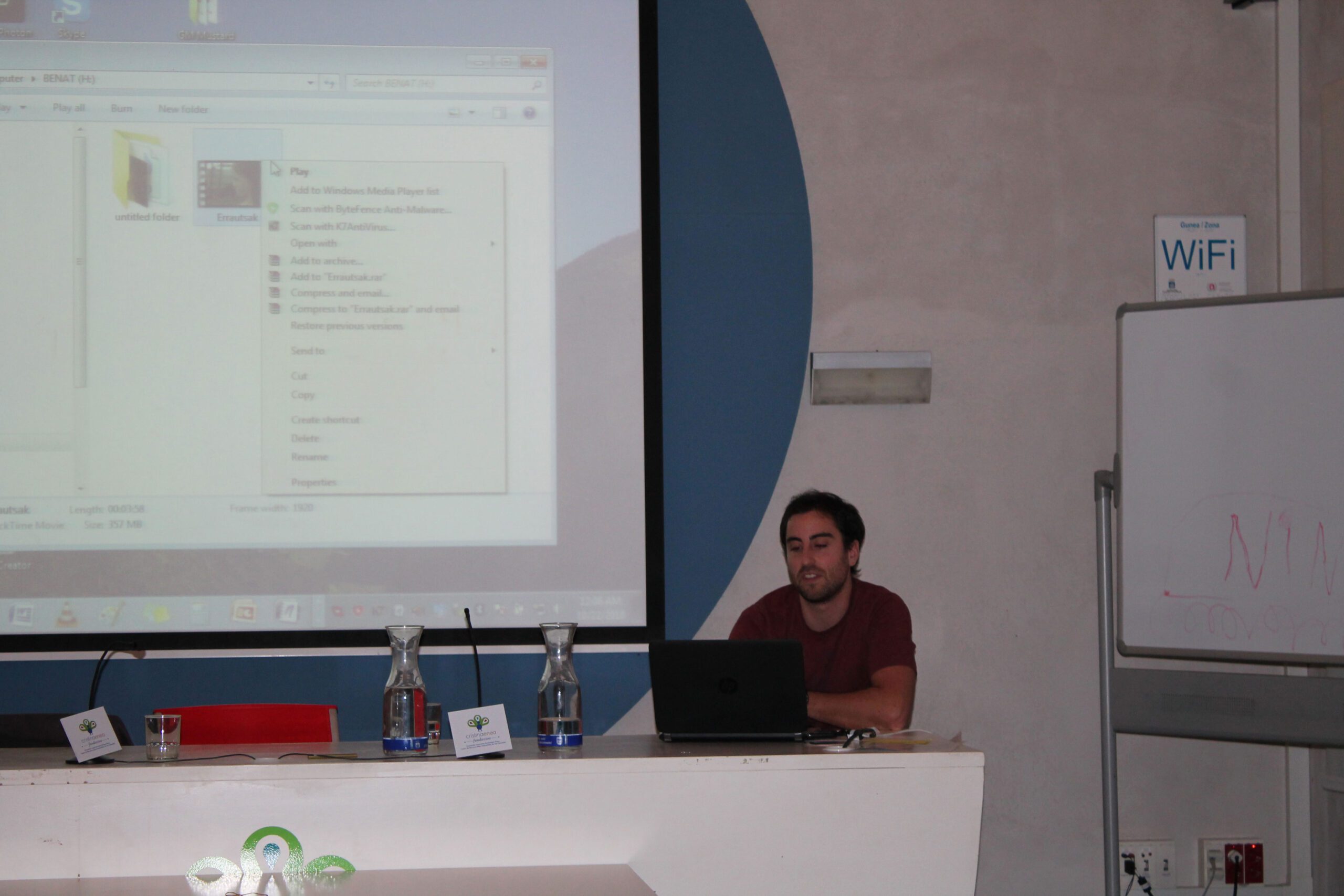
On 21 October, following the conclusion of the Dialogue Circle, Beñat Igerabide will present the music video “Errautsak”, a tribute to nature and life.
More information: alexcarrascosa@gernikagogoratuz.org • Telephone: 688899950
21-22 October 2016.
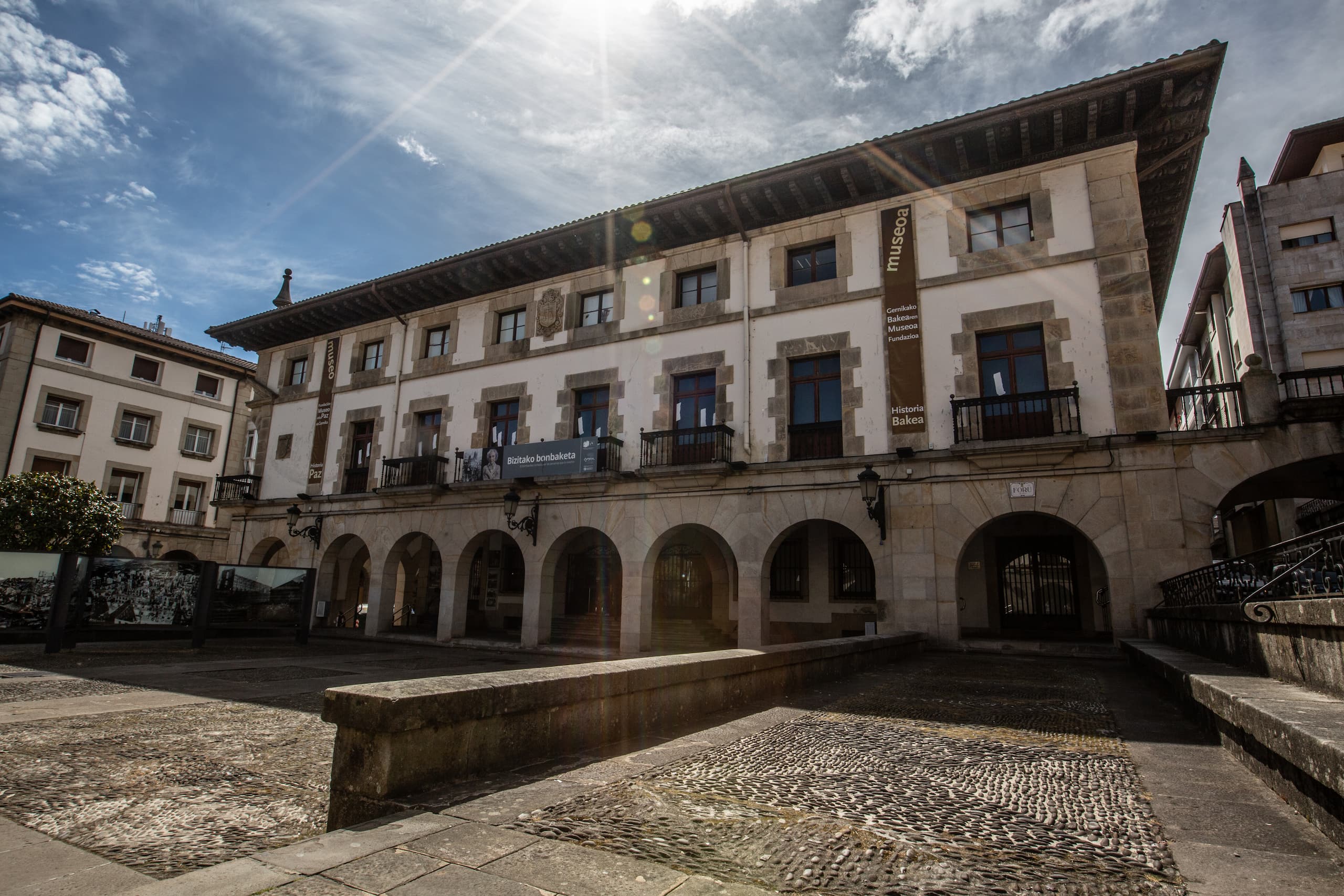
zuzendaritza@bakearenmuseoagernika.eus





More
International Peace Day 2026
On 21 September, we celebrated once again the International Day of Peace.
Opening of the Booking Period (2027)